Claims experience is the single biggest driver of insurance customer loyalty — and one of the easiest places for a carrier to lose a customer. Research from Accenture found that of customers dissatisfied with their claims experience, 29% had already switched carriers and 54% planned to switch within the next 12 months. In other words, roughly 4 out of 5 dissatisfied claims customers are on their way out the door. From First notice of loss (FNOL) through final payment, the claims journey is the moment insurance stops being an abstract policy and becomes a real test of whether the carrier shows up when it matters.
What Is Claims Automation?
Claims automation applies AI to the touchpoints across the claims lifecycle — from initial loss reporting through status updates, documentation, and payment — reducing the manual back-and-forth that has traditionally made claims slow and frustrating for both customers and adjusters. The goal isn't to remove people from the process; it's to remove the friction that keeps adjusters from focusing on the claims that actually need their judgment.
First Notice of Loss: Where the Experience Is Won or Lost
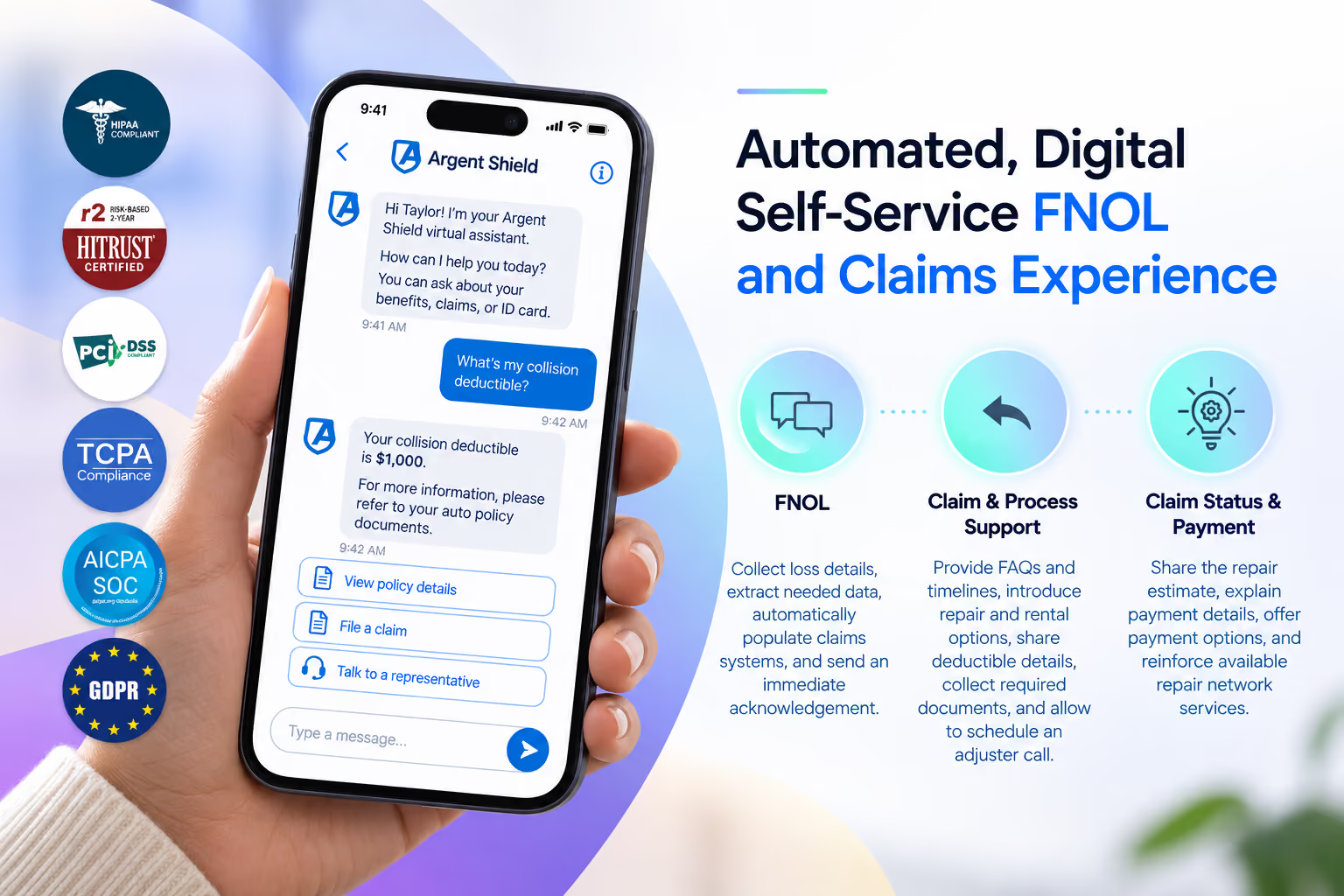
FNOL sets the tone for everything that follows. A customer who's just been in an accident, at 2am, doesn't want to navigate an IVR menu or wait for business hours to open a claim — they want to report what happened and know someone is handling it. AI agents can take that FNOL intake conversationally, at any hour, on the channel the customer already has open (SMS, voice, email, or chat), and immediately route it to the right queue — instead of the customer waiting days to reach someone who can even tell them what happens next.
The same logic applies on the workers' compensation side: as soon as an employer notifies a carrier of a workplace injury, an AI agent can reach the injured employee directly with a reassuring, informative update — rather than leaving them to wonder for days whether their claim is even being processed.

Beyond Intake: Automating the Full Claims Lifecycle
Claims automation extends well past FNOL:
- Status updates and two-way communication. Instead of one-way notifications, AI agents let customers ask a question mid-claim and get an answer immediately, without starting a new support ticket.
- Documentation and intake. AI agents can collect and structure the information adjusters need — photos, forms, follow-up answers — without a customer needing to know what "complete" documentation looks like.
- Payment and closure. Proactive updates on payment status and digital payment enrollment reduce the anxiety and inbound-call volume that typically clusters around claim closeout.
This applies across both Life, Accident & Health (LA&H) and Property & Casualty (P&C) lines, and covers the full range of claim types — from a short-term disability claim to an auto accident to a catastrophic property loss.
Managing Claims Volatility with Predictive, Automated Outreach
Claims volume isn't evenly distributed — carriers can anticipate seasonal peaks (hurricane season, wildfire season, recession-driven upticks in disability claims) using historical data. AI agents make it possible to scale outreach to match that volatility without scaling headcount proportionally: proactively messaging customers in an at-risk area before a forecasted event, offering mitigation guidance, and connecting them to service providers — all through automated, channel-preferred outreach that doesn't require adjuster capacity until a claim is actually filed. That keeps adjusters free to focus on the claims that need a human during exactly the moments — a catastrophic event, a serious injury — when that human touch matters most.

Why Communication and Empathy Still Matter
Being a claims adjuster during a crisis — a weather catastrophe, a serious injury — means functioning something like a first responder. Communication and empathy are the two things a good claims experience can't do without; lose either one, and a customer starts shopping for a new carrier before the call even ends. Claims automation's real value isn't replacing that human moment — it's removing everything routine and predictable (status check-ins, documentation requests, payment enrollment reminders) so adjusters have the bandwidth to actually be present for the moments that need them.
Getting the Most Out of Claims Automation
The claims processes most worth automating are the ones with the highest volume and lowest need for adjuster judgment: FNOL intake, routine status updates, documentation collection, and payment communications. Ushur's AI agents handle these conversationally and omnichannel — letting customers engage over text, email, or chat, on their terms — while giving carriers a single, governed platform to configure and monitor automation across the entire claims lifecycle, rather than stitching together point solutions for each touchpoint.
Carriers using Ushur's AI agents for claims see measurable reductions in inbound call volume and improved customer satisfaction scores, driven largely by proactive status updates that answer the question of where a claim stands before the customer has to ask it.
Conclusion
Claims experience determines retention more than almost any other insurance touchpoint, and the data on dissatisfied customers leaving is stark. AI agents that can actually complete claims-related tasks — not just explain the process — give carriers a way to be faster and more responsive at scale, while keeping adjuster time focused where empathy and judgment genuinely matter.
Ready to see how Ushur's AI agents can transform your claims automation? Learn more at ushur.ai/request-demo.
Frequently Asked Questions on Claims Automation
What is claims automation?
Claims automation applies AI to touchpoints across the insurance claims lifecycle, from first notice of loss through payment — reducing manual back-and-forth for both customers and adjusters.
How does AI improve first notice of loss (FNOL)?
AI agents let customers report a loss conversationally, at any hour, on their preferred channel, and route it to the right queue immediately — instead of waiting for business hours or an available phone line.
Can AI agents process an insurance claim end to end?
Yes. Ushur's AI agents handle intake, documentation collection, status updates, and payment communication across the claims lifecycle, escalating to a human adjuster only when a claim genuinely needs one.
Why does claims experience matter for insurance customer retention?
Accenture research found that among customers dissatisfied with their claims experience, 29% had already switched carriers and 54% planned to within 12 months — making claims experience one of the strongest predictors of insurance customer churn.